

Good business knowledge of our warehouse processes will help us to have better planning of material resources, avoid excesses or stock-outs, and better coordination between departments. Discover how to improve consignment inventory management using Oracle JD Edwards.
JD Edwards ERP offers several alternatives to manage stock:
- Demand Planning
- Material Requirements Planning (MRP)
- Consignment Inventory
- Sales Inventory Management
What about Consigment Inventory
Consigned inventory management is a supply chain management strategy in which the supplier places some of its inventory in the possession of the customer without invoicing until after the products are consumed.
These are the most common steps in a consigned inventory process:
- The supplier and customer establish an agreement to ship and hold inventory at the customer’s location.
- The supplier ships inventory to the customer’s location.
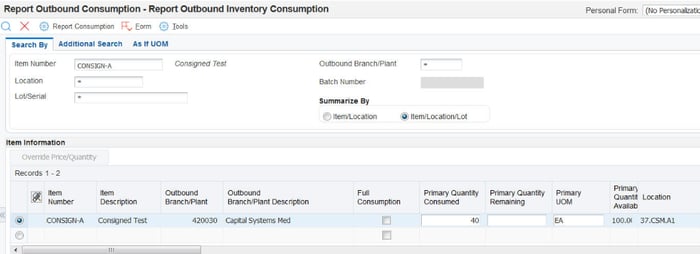
- The customer consumes the inventory and reports these consumptions to the supplier.
- The supplier invoices the customer for the reported material consumption.
- If agreed, the supplier replenishes the inventory at the customer’s location.
Advantages of using Oracle JD Edwards for Consignment Inventory Management
Oracle JD Edwards offers numerous advantages for consignment inventory management, such as:
- Increased efficiency in tracking and controlling consignment inventory.
- Automation of the processes of receiving, storing, and distributing goods on consignment.
- Ability to generate detailed reports and analysis of consignment inventory, enabling more informed and strategic decisions.
How to optimize the consignment receiving and storage process
To optimize the receiving and consignment warehousing process using Oracle JD Edwards, the following steps should be taken:
- Establish a barcode or RFID tag system to identify and track each consignment item.
- Use Oracle JD Edwards receiving and warehousing functionality to record and document each consignment delivery.
- Establish clear and efficient procedures for organizing and storing consignment merchandise.
- Use Oracle JD Edwards reporting and analysis tools to track consignment inventory in detail.
By following these steps, you can optimize the process of receiving and storing consignment inventory with Oracle JD Edwards.
The Consigned Inventory Management module of JD Edwards will allow us to manage this process by means of:
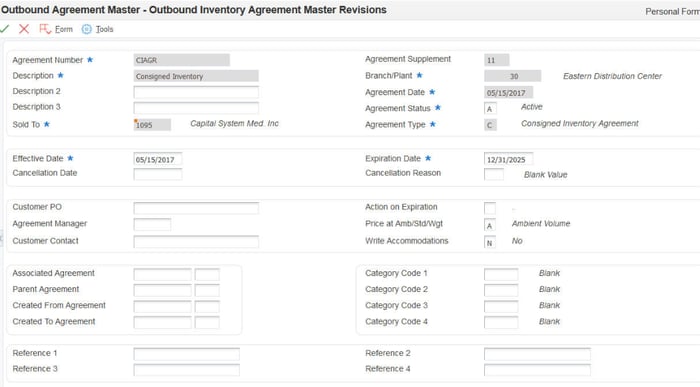
1. Introduction of agreements between the supplier and the customer.
In them, we will be able to set items, quantities, procurement method, effective dates of the contract, price, etc.
2. Sending inventory and consulting on its use.
3. Report consumption
4. Replenish inventory
5. Invoice the customer for consumption
The benefits provided by the JD Edwards Consigned Inventory Management module are:
General Benefits:
- Management and monitoring of agreements between supplier and customer Inventory replenishment forecast for better demand planning.
- Greater visibility into inventory movement.
- Fewer stockouts.
- Automated inventory consumption reports.
Supplier Benefits:
- Increased sales.
- Reduction of storage space and its costs.
- Real-time inventory consumption.
- Reduced inventory holding costs.
- Business assured with the customer.
Customer Benefits:
- Free of financial responsibility until the material is consumed.
- Reduction of operating costs.
- Reduction of capital expenditures.
- Reduced risk of stock-outs.
Best Practices for Consignment Inventory Management with Oracle JD Edwards
Some of the best practices for consignment inventory management with Oracle JD Edwards include:
- Maintain an up-to-date and accurate inventory using Oracle JD Edwards tracking and control tools.
- Establish periodic audit procedures to ensure the integrity of consignment inventory.
- Use Oracle JD Edwards’ inventory planning functionality to predict demand and prevent shortages or excess consignment goods.
- Establish clear and efficient policies for the return and settlement of goods on consignment.