

Understanding how data is structured in an OLAP cube is key to understanding how Oracle EPM solutions work and how each value is located within a multidimensional model.
When we work with relational databases, we typically think of tables, rows, columns, and records. However, in Enterprise Performance Management (EPM) solutions based on multidimensional structures, the way information is organized and queried is different.
In an OLAP cube, the data is structured using different dimensions. Each combination of members of these dimensions allows you to locate a specific value.
To understand it in a simple way, we can think of dimensions as the coordinates that tell us where to find a piece of data.
What is an OLAP cube?
An OLAP (Online Analytical Processing) cube is a multidimensional structure designed to organize and analyze large volumes of information from different perspectives.
In the Oracle EPM environment, cubes allow you to work with dimensions such as Time, Account, Entity, Scenario, Currency, Product, and more. These dimensions represent different categories of the business and their members allow us to specify the level of detail with which we want to analyze the information. Oracle explains that each value of a multidimensional cube is at the intersection of the members of its dimensions.
For example, a company may want to analyze its expenses by looking at:
- The period.
- The year.
- The scenario.
- The currency.
- The account.
- The entity.
- The department.
Each of these perspectives can constitute a dimension of the model.
Therefore, instead of thinking only of a record in a table, we can imagine each piece of data as a point located within a multidimensional space.
How is data organized in an OLAP cube?
To understand how this structure works, we can turn to a mathematical analogy.
In a Cartesian plane, a point can be identified by coordinates:
(a, b)
These coordinates allow us to know exactly where that point is located.
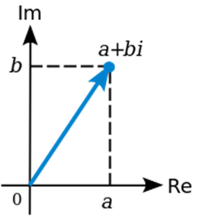
If we add more dimensions, we can represent positions in spaces of greater dimensionality. Something similar happens in an OLAP cube from a conceptual point of view: each dimension provides a coordinate that helps to identify a specific piece of data.
We’re not saying that an EPM cube is literally a mathematical coordinate system. It is a simple way to understand how information is structured and located within a multidimensional model.
From the data vector to business data
We can use an everyday example to better understand this idea.
Let’s imagine that we want to identify an office by several attributes:
(Street, Number, Floor, Zip Code, City)
For example: (Gran Vía, 50, 4, 28013, Madrid)
The combination of all these values allows us to identify a specific location.
In a multidimensional cube, something conceptually similar happens. Dimensions and their members allow you to identify the intersection at which a given value is located.
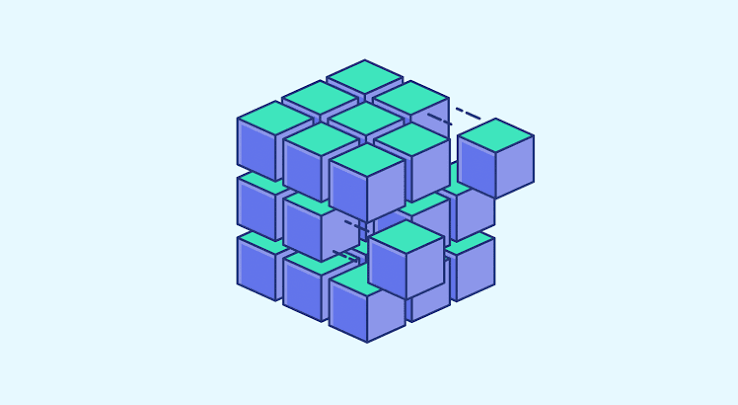
Therefore, as a didactic resource, we can speak of a data vector: an ordered combination of members of different dimensions that allows us to locate a fact or value.
An example of data in an EPM OLAP cube
Let’s say a company wants to analyze its personnel expenses.
As of June 2026, the company has recorded €200,000 in salary and wage expenses.
This data could be conceptually represented as follows:
(June, 2026, Real, EUR, Wages Salaries) = €200,000
In this example, each item provides information:
- June → member of the Period dimension.
- 2026 → member of the Year dimension.
- Real → member of the Scenario dimension.
- EUR → member of the Currency dimension.
- Salaries and Wages → member of the Account dimension.
- €200,000 → value stored at that intersection.
In this way, we could represent the structure of the data as:
(Period, Year, Scenario, Currency, Account) = Done
The combination of members of the five dimensions identifies a specific position within the multidimensional model.
What are dimensions and members?
Dimensions are categories that allow you to organize your business data. Within each dimension we find members, which are the specific elements that we use to analyze the information.
For example:
Time Dimension
- 2026
- Q1
- Q2
- June
- July
Stage Dimension
- Real
- Specifications
- Forecast
Account Dimension
- Income
- Expenses
- Wages and Salaries
- Marketing
Oracle Cloud Enterprise Performance Management uses dimensions and members to structure business process information. Dimensions can also be organized by hierarchies, allowing information to be analyzed from different levels of detail.
Thus, we can move from an overview to a much more detailed one.
For example:
Year → Quarter → Month
or:
Account → Personnel Costs → Salaries and Wages
How is data located within an OLAP cube?
The key is in the intersection of dimensions.
Let’s imagine a model with the following dimensions:
Account × Period × Scenario
If we select:
Salaries and Wages × June × Real
The intersection of these three members represents a concrete value.
In Essbase, Oracle uses precisely this concept of multidimensional intersection: to refer to a given value, you need to specify the corresponding member of each relevant dimension.
For example:
Salaries and Wages → June → Real
It can identify a particular cell in the cube.
If we change June to July, we are looking at another intersection and, therefore, another value.
If we change Real to Budget, we can compare the actual data with the budgeted data.
It is precisely this structure that allows business information to be analysed from different perspectives.
Why use a multidimensional structure?
One of the main advantages of working with multidimensional models is that information can be analyzed from different dimensions of the business without having to build a separate structure for each analysis.
For example, a company can analyze its expenses:
- Per year.
- Per month.
- By entity.
- Per account.
- By department.
- By stage.
- By currency.
In addition, dimensions can contain hierarchies that allow analysis to be performed from different levels of consolidation. Oracle notes that dimensions and their members allow you to organize data and establish hierarchical and consolidation relationships.
This is especially relevant in planning, budgeting, consolidation, and financial analysis processes.
OLAP and Oracle EPM Cubes
Multi-dimensional cubes are a critical part of many Oracle Enterprise Performance Management solutions.
Oracle EPM enables you to structure financial and business information using dimensions that represent different business perspectives. These may include time dimensions, accounts, entities, products, scenarios, or markets, depending on the business process and the model designed.
This structure allows the same data to be analyzed within different contexts.
For example, the €200,000 in wages and salaries in the example above can be part of broader analyses:
Real vs. Specifications
2026 vs. 2025
Madrid vs. Barcelona
January vs. June
Department A vs. Department B
The value does not necessarily change, but the perspective from which we analyze it does change.
The importance of designing dimensions correctly
The dimension structure is especially important when designing an EPM model.
A correct definition of dimensions and hierarchies allows:
- Organize information in a coherent way.
- Facilitate financial analysis.
- Define different levels of consolidation.
- Improve data navigation and consultation.
- Establish different perspectives of analysis.
- Facilitate planning and reporting processes.
In addition, Oracle EPM allows you to work with hierarchies and members within dimensions, as well as different consolidation properties and structures.
Therefore, the design of the model should not be considered only from a technical perspective. It should also respond to how the organization needs to analyze and manage its information.
So how should we imagine an OLAP cube?
A simple way to visualize it is to think of each dimension as representing a question:
When? → Period
In what scenario? → Actual / Budget / Forecast
What are we analyzing? → Account
Where? → Entity / Geography
In what currency? → EUR/USD/etc.
The combination of all these answers leads us to a specific point in the model.
That’s why, when we talk about multidimensional data, we shouldn’t just think about rows and columns.
We must think about intersections.
And that’s the fundamental idea for understanding how data is organized within an EPM OLAP cube.
Want to optimize your Oracle EPM model?
Properly designing information dimensions, hierarchies, and structures is critical to getting the most out of an Oracle EPM solution.
At Unikal Tech Partners we help organizations design, implement and evolve technological solutions aimed at planning, managing and analyzing business information.
Want to know how Oracle EPM can adapt to your organization’s needs? Let’s talk.