
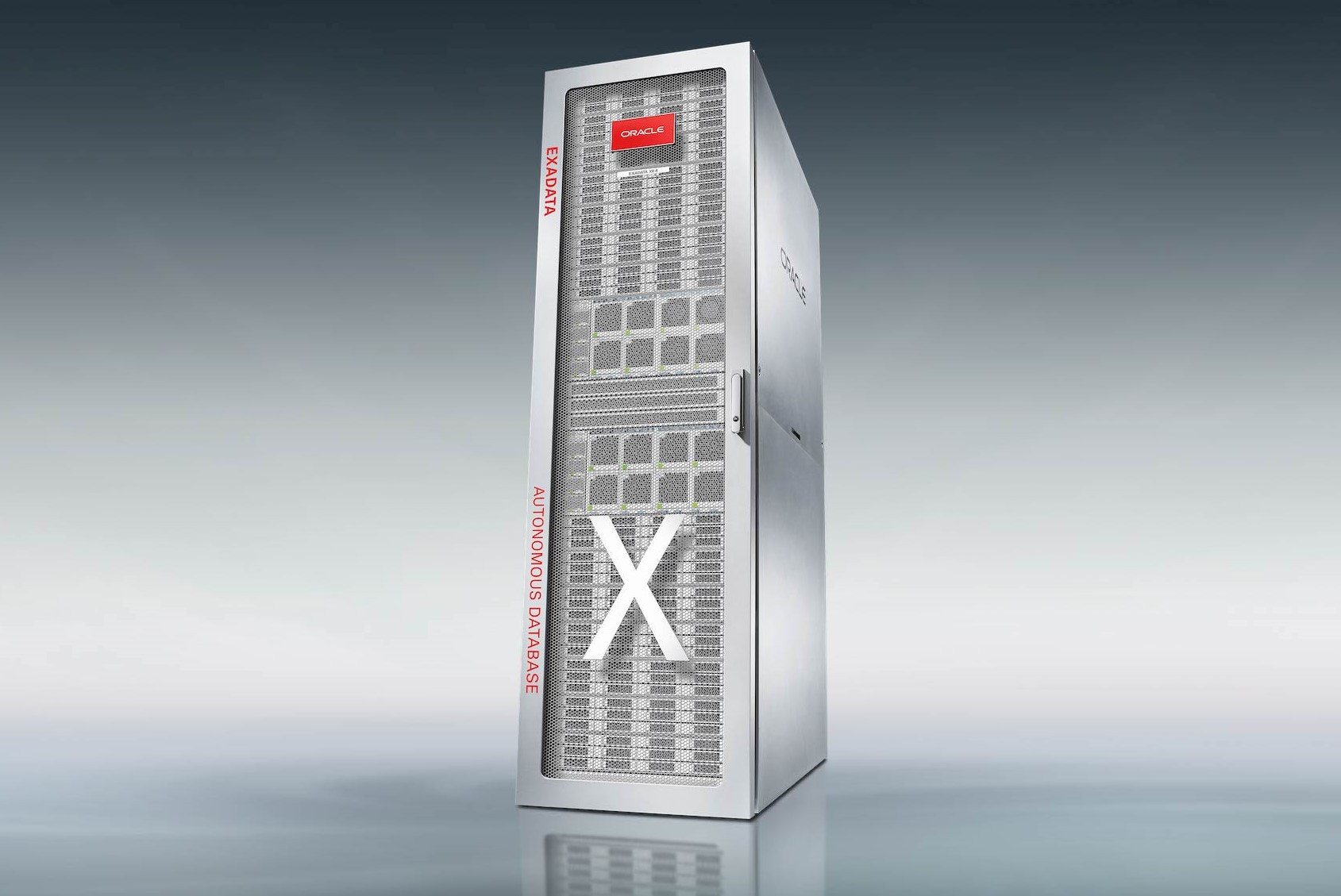
Organizations need infrastructures capable of processing large volumes of information, running critical applications, and maintaining stable performance even as workloads increase. In this context, Oracle Exadata and Oracle Exalogic are part of Oracle’s strategy to deliver engineered systems where hardware, software, storage, and communications are designed to work together.
While Oracle Exadata is specifically geared towards optimizing Oracle Database workloads, Oracle Exalogic Elastic Cloud is designed as a platform for enterprise applications and middleware. In certain scenarios, both technologies can complement each other to build high-performance and high-availability architectures.
What is Oracle Exadata?
Oracle Exadata Database Machine is a platform specifically designed to run Oracle Database with high levels of performance, availability, and scalability.
Its architecture combines database servers, intelligent storage servers, and a high-speed internal network. This integration allows certain operations that are traditionally executed on database servers to be processed directly at the storage layer.
The result is an architecture optimized for different types of loads, from transactional processing (OLTP) to analytics, database consolidation, and new AI-related loads.
Unlike a conventional infrastructure, where each component may come from a different manufacturer and must be configured and optimized separately, Exadata integrates the various elements of the platform to work in a coordinated manner.

How does Oracle Exadata work?
One of the main differentiators of Oracle Exadata is its intelligent data architecture.
The platform incorporates database servers and storage servers that work together using a low-latency, high-performance internal network. This allows you to distribute certain operations and take advantage of the resources available throughout the platform.
Among the technologies that contribute to this operation is Exadata Smart Scan.
Exadata Smart Scan: Intelligent Processing in Storage
Smart Scan allows you to offload certain SQL-intensive operations from the database servers to the storage servers.
Instead of moving large amounts of information from storage to database servers for further processing, Exadata can filter and process data directly at the storage layer and return only the relevant information.
This reduces the volume of data that must move through the infrastructure and allows you to take advantage of the parallel processing available on storage servers.
For example, when faced with a query that needs to analyze millions of records to retrieve only certain rows and columns, Smart Scan can perform part of that filtering directly in the storage.

This reduces data movement and processing load on database servers.
Key Benefits of Oracle Exadata
Oracle Exadata’s architecture is geared toward solving some of the major challenges associated with enterprise databases.
1. High performance
Exadata incorporates compute, storage, and communication technologies optimized for Oracle Database.
The architecture allows loads to be distributed across different resources and uses parallel processing, intelligent storage, and low-latency mechanisms to accelerate intensive operations.
This is especially relevant in environments with large volumes of data or with applications that require predictable response times.
2. Scalability
Organizations can increase the platform’s ability to respond to the growth of their applications and databases.
Exadata’s scale-out architecture allows you to scale compute and storage resources according to the needs of your workloads.
3. High availability
Availability is especially important when Oracle Database supports business-critical processes.
Exadata is designed to protect against different types of failures and can be used in conjunction with Oracle Maximum Availability Architecture (MAA) capabilities to build architectures to minimize disruptions. Oracle notes that Exadata can achieve five-nines availability levels when deployed following MAA practices.
Technologies such as Oracle Real Application Clusters (RAC), Oracle Active Data Guard , and Application Continuity can be part of these high availability and data protection architectures.
4. Storage optimization
Exadata incorporates different mechanisms to optimize storage usage and improve performance.
These include Hybrid Columnar Compression (HCC), which can significantly reduce the space required for certain types of data and improve performance in analytical loads.
5. Database consolidation
Another common application of Exadata is the consolidation of multiple databases and workloads on a common infrastructure.
This allows you to reduce the dispersion of platforms, simplify administration and make more efficient use of available resources.
Oracle Exadata for Different Workloads
One of the most important features of Exadata is that you are not limited to a single type of application.
Its architecture is designed to work with different load profiles, including:
- OLTP, for mission-critical transactional operations.
- Data Warehouse, for large volumes of information.
- Analytics, for queries and intensive data processing.
- Consolidation, to run multiple databases on a common infrastructure.
- AI-related loads, including vector search and processing capabilities in current Exadata architectures.
This flexibility allows Exadata to be used as a data platform for different business needs.
What is Oracle Exalogic Elastic Cloud?
Oracle Exalogic Elastic Cloud is an engineered system for enterprise applications, middleware, and workloads that require high levels of performance, scalability, and reliability.
Unlike Exadata, whose primary goal is to optimize Oracle Database, Exalogic is designed to provide a platform for running applications and middleware components.
Oracle defines Exalogic as an integrated system of hardware and software specifically intended for large-scale, performance-sensitive enterprise deployments.
Its architecture integrates compute, storage, and communications resources, along with software components geared toward running enterprise applications and Oracle middleware.
What role does Exalogic play in an enterprise architecture?
Exalogic is especially associated with scenarios where it is necessary to provide a robust infrastructure for enterprise applications, middleware and Java environments.
Its design allows different applications and workloads to be consolidated within a common infrastructure, maintaining isolation and resource management mechanisms.
Among its usage scenarios are:
- Mission-critical business applications.
- Oracle Fusion Middleware.
- Java applications.
- Oracle WebLogic Server.
- Application consolidation.
- Private environments geared toward business loads.
- Applications with high performance and availability requirements.
Oracle Exadata vs. Oracle Exalogic: What’s the Difference?
Although both technologies belong to the Oracle Engineered Systems family, their primary purpose is different.
| Oracle Exadata | Oracle Exalogic | |
|---|---|---|
| Main objective | Database | Applications and middleware |
| Specialization | Oracle Database | Enterprise Applications and Java |
| Processing | Data and database queries | Applications and middleware |
| Use Cases | OLTP, analytics, data warehouse, consolidation, and AI | Enterprise Applications, Middleware, and Consolidation |
| Main advantage | Oracle Database Performance and Efficiency | Application Performance and Scalability |
| Architecture | DB Servers + Smart Storage | Compute + Storage + Network + Embedded Software |
Therefore, it is not necessarily a matter of choosing between one platform or another.
In certain architectures, Exadata and Exalogic can complement each other, placing the database layer on top of Exadata and the application and middleware layer on Exalogic.
Oracle Exadata + Exalogic: An Integrated Architecture
One of the most exciting possibilities is to use both platforms within an integrated enterprise architecture.
In this scenario, Exalogic can provide the infrastructure needed to run the applications and middleware, while Exadata takes care of the Oracle databases that support those applications.
In this way, each platform is specialized in the type of cargo for which it has been designed.
Oracle Exalogic → Application Layer
Oracle Exadata → Database Layer
This separation allows each level of the architecture to be optimized and efficient communication between applications and databases to be established.
Oracle’s documentation contemplates precisely deployment scenarios in which Exalogic works in conjunction with Exadata for Oracle Fusion Middleware applications.
What are the benefits of this combination?
Using Oracle Exadata and Exalogic together can be especially interesting in organizations with critical applications and large volumes of data.
End-to-end extreme performance
The infrastructure is optimized at different levels: from the execution of the applications to the processing of the database.
Exadata brings specific capabilities to accelerate Oracle Database operations, while Exalogic provides an optimized platform for applications and middleware.
Scalability
Both platforms are designed to respond to business environments with growing capacity needs.
This makes it easier to build architectures capable of adapting to evolving workloads.
Availability
Exadata-based architectures can incorporate different high availability and data protection technologies, while application infrastructure can be designed to minimize single points of failure.
The result is an application-oriented architecture where service continuity is considered from the different layers.
Simplifying infrastructure
The concept of Engineered Systems makes it possible to reduce some of the complexity associated with integrating components from different manufacturers and optimizing them individually.
Hardware, software, storage, and communications have been designed to work together, which can facilitate deployment, operation, and support tasks.
When does it make sense to use Oracle Exadata?
Oracle Exadata may be especially well-suited for organizations that need:
- Run mission-critical Oracle databases.
- Improve the performance of large databases.
- Process large volumes of information.
- Run OLTP and analytics loads on top of a single platform.
- Consolidate multiple databases.
- Increase the availability of your systems.
- Prepare data infrastructure for new AI and analytics workloads.
- Reduce bottlenecks associated with data storage and movement.
And the Exadata ecosystem isn’t limited to traditional deployments. Oracle currently offers Exadata Database Service options in a variety of deployment models, including Oracle Cloud Infrastructure, OCI Dedicated Region, Exadata Cloud@Customer, and select multicloud options.
Exadata’s role in the evolution to the Cloud
The evolution of Exadata is also linked to the transition from traditional architectures to cloud models.
Oracle Exadata can be found in both dedicated architectures and managed services in Oracle Cloud Infrastructure and other deployment models.
In addition, Oracle has evolved the Exadata architecture towards Exadata Exascale, which incorporates cloud concepts such as elasticity, multi-tenancy, and resource pooling, while maintaining the performance, availability, and security capabilities associated with Exadata.
This allows Exadata to be considered not only as a physical platform for databases, but as part of a broader strategy to modernize enterprise data infrastructure.
Oracle Exadata for Business-Critical Loads
When a database supports financial processes, operations, e-commerce, customer service systems, or business applications, a performance or availability issue can have a direct impact on the business.
For this reason, the choice of database infrastructure must consider much more than storage capacity.
It is necessary to assess aspects such as:
- Performance.
- Latency.
- Capacity for growth.
- Availability.
- Data protection.
- Security.
- Consolidation.
- Administration.
- Application integration.
- Deployment model.
Oracle Exadata addresses these aspects from an architecture specifically optimized for Oracle Database.
Why opt for an Oracle Engineered Systems architecture?
The main value of Oracle Engineered Systems is in the integration.
Instead of building a platform from separate components and then optimizing how they work together, Oracle designs hardware and software to work as an integrated system.
In the case of Exadata, this philosophy translates into an architecture where the database, servers, storage, and network work together to optimize data processing.
In the case of Exalogic, the focus is on applications and middleware.
Conclusion
Oracle Exadata is a purpose-built platform to bring Oracle Database into a high-performance, scalable, and available environment. Its intelligent architecture allows optimizing data processing, reducing unnecessary movements of information and responding to different types of business loads.
Oracle Exalogic Elastic Cloud, meanwhile, is oriented to the application layer and middleware, providing an integrated infrastructure for demanding business loads.
When both technologies are used in a complementary way, it is possible to build an architecture in which each platform specializes in its field: Exalogic for applications and Exadata for data.
For organizations that work with critical Oracle databases and need to evolve their infrastructure, Exadata represents an especially relevant alternative to combine performance, scalability, availability, and efficiency, both in traditional architectures and in new cloud models.
Need to optimize your Oracle infrastructure?
At Unikal Tech, we help organizations analyze their infrastructure, database, and cloud needs to design Oracle architectures tailored to their workloads and business objectives.
Contact our team to analyze your environment and find out which Oracle architecture may best fit your needs.